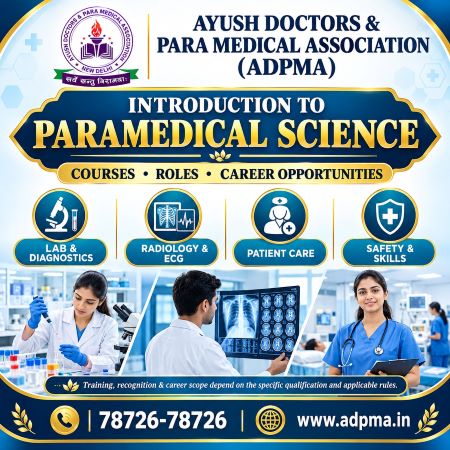
Introduction to Paramedical Science: Courses, Roles and Career Opportunities
Introduction
Paramedical science is an important part of the healthcare system. Paramedical and allied healthcare professionals support doctors, nurses and other healthcare practitioners in diagnostic testing, medical imaging, patient care, emergency services, rehabilitation and other healthcare activities.
These professionals help healthcare facilities deliver organised, efficient and patient-focused services. Depending on their education, training, qualifications and applicable regulations, they may work in hospitals, diagnostic laboratories, imaging centres, rehabilitation facilities and other healthcare settings.
For students interested in healthcare, paramedical education can provide a pathway to develop technical knowledge, practical skills and professional competence in a specialised field.
In this article, we will explore the meaning of paramedical science, popular course categories, the roles of paramedical technicians, career opportunities and important points to consider before choosing a course.
What Is Paramedical Science?
Paramedical science refers broadly to healthcare-related education and professional activities that support medical diagnosis, treatment, patient monitoring, rehabilitation and healthcare delivery.
Paramedical professionals work in different departments according to their training and assigned responsibilities. For example, laboratory technicians assist with diagnostic testing, radiology technicians support medical imaging procedures, and operation theatre technicians help prepare and maintain the operation theatre environment.
The term paramedical is often used broadly in India. Some programmes may fall under the allied and healthcare professions framework, while others may have different institutional or regulatory requirements. Therefore, students should verify the status and requirements of their chosen course before admission.
Importance of Paramedical Science in Healthcare
Paramedical professionals contribute to the healthcare system in several ways.
1. Support for Medical Diagnosis
Medical laboratory and imaging professionals help produce diagnostic information that qualified healthcare practitioners use when evaluating patients.
2. Patient Care and Monitoring
Trained healthcare support personnel assist with patient comfort, observation, mobility and routine care within their assigned scope of work.
3. Emergency and Critical Care Support
Professionals with appropriate emergency-care training may assist with patient assessment, monitoring, transport and emergency response according to their qualifications and protocols.
4. Operation Theatre Assistance
Operation theatre personnel help prepare equipment, maintain the required environment and support the surgical team in accordance with established procedures.
5. Rehabilitation and Recovery
Professionals in rehabilitation-related services support patient recovery under the appropriate clinical supervision and within their professional scope.
Popular Paramedical Courses
Paramedical education includes certificate, diploma, undergraduate and postgraduate programmes. Course names, eligibility criteria, duration and recognition requirements vary by institution and programme.
Some commonly encountered course areas are listed below.
|
Course or Specialisation |
Typical Area of Study |
|
Medical Laboratory Technology |
Laboratory procedures, sample handling and diagnostic testing |
|
X-Ray and Radiology Technology |
Medical imaging procedures and radiation safety |
|
ECG Technology |
Electrocardiogram recording and basic cardiac monitoring |
|
Operation Theatre Technology |
Operation theatre preparation, equipment and infection prevention |
|
Dialysis Technology |
Support for haemodialysis procedures and dialysis-unit safety |
|
Physiotherapy Technology |
Support for rehabilitation and physiotherapy services |
|
Ophthalmic Assistant Training |
Basic eye-care support and ophthalmic procedures within the assigned role |
|
Emergency Medical Technology |
Emergency response and patient transport, according to training |
|
General Duty Assistant (GDA) |
Basic patient care and hospital support |
|
Dental Technology |
Dental laboratory procedures and fabrication of dental appliances |
Important: This is a general overview of course areas, not a confirmation that every course is available at every institution or that all programmes have identical recognition or professional outcomes. Students should check the exact programme title, awarding body, curriculum, practical training arrangements and applicable regulatory requirements.
Different Types of Paramedical Specialisations
1. Medical Laboratory Technology
Medical laboratory professionals support the examination of clinical specimens such as blood, urine and other samples. Their duties may include specimen processing, laboratory testing, equipment handling, quality-control procedures and maintaining laboratory records.
Laboratory work requires attention to detail, proper sample identification, hygiene and adherence to laboratory safety protocols.
2. X-Ray and Radiology Technology
Radiology professionals assist with diagnostic imaging procedures. Their work may involve patient preparation, positioning, equipment operation and radiation-protection practices, subject to their training and authorisation.
Radiation safety and compliance with applicable rules are essential in this field.
3. ECG and Cardiac Technology
ECG-related training focuses on recording the electrical activity of the heart using an electrocardiogram machine. Depending on the programme and role, personnel may help prepare patients, place electrodes, record traces and maintain equipment.
An ECG technician's role does not automatically include independently diagnosing cardiac conditions.
4. Operation Theatre Technology
Operation theatre technicians support the surgical environment by helping prepare equipment, arrange supplies, follow infection-prevention protocols and assist the surgical team within their assigned responsibilities.
Sterilisation, correct handling of instruments and communication are important aspects of this specialisation.
5. Dialysis Technology
Dialysis-related professionals support the delivery of dialysis services. Their duties may include preparing equipment, following infection-control procedures, monitoring relevant parameters and assisting the clinical team according to their qualification and workplace protocols.
This area requires specialised training because dialysis involves patients with complex medical needs.
6. Physiotherapy and Rehabilitation Support
Physiotherapy-related support roles may involve preparing treatment areas, assisting with prescribed exercises and helping patients with mobility under appropriate professional direction. The responsibilities depend on the qualification and applicable rules.
A technician or assistant qualification should not be assumed to confer the same scope of practice as a licensed or registered physiotherapist.
7. General Duty Assistant (GDA)
General Duty Assistants support routine patient-care activities, which may include helping with mobility, hygiene, comfort, feeding assistance where appropriate and reporting observations to the relevant healthcare staff.
GDA training is generally focused on patient-care support rather than independent diagnosis or treatment.
What Does a Paramedical Technician Do?
The exact duties of a paramedical technician depend on their specialisation, qualifications, workplace policies and applicable regulations. Common responsibilities may include:
- Preparing equipment and work areas before procedures.
- Assisting with patient preparation and comfort.
- Following hygiene, infection-prevention and safety protocols.
- Handling samples or operating equipment when trained and authorised.
- Recording relevant information accurately.
- Maintaining equipment and departmental records.
- Communicating observations and procedural concerns to the appropriate healthcare professional.
- Protecting patient confidentiality and respecting patient dignity.
Paramedical technicians should work within their authorised scope and seek assistance when a task falls outside their training or permitted responsibilities.
Skills Required for a Career in Paramedical Science
Students considering paramedical education should work on developing the following skills.
Technical Skills
A sound understanding of the relevant equipment, procedures, terminology and safety standards is important for each specialisation.
Communication Skills
Healthcare workers need to communicate clearly with patients, families and other members of the healthcare team.
Attention to Detail
Accurate sample labelling, patient identification, recordkeeping and equipment checks can be essential to patient safety.
Teamwork
Healthcare services depend on coordination between doctors, nurses, technicians, administrative staff and other professionals.
Professional Ethics
Confidentiality, respect, honesty, accountability and appropriate professional boundaries are fundamental in healthcare.
Infection Prevention and Safety Awareness
Hand hygiene, appropriate protective equipment, safe handling of materials and compliance with workplace protocols help reduce avoidable risks.
Eligibility for Paramedical Courses
Eligibility depends on the course and the institution offering it. Common entry requirements may include:
- After Class 10: Some certificate or entry-level vocational programmes may accept students who have completed Class 10.
- After Class 12: Many diploma and degree programmes require Class 12. Some programmes require Physics, Chemistry and Biology, while others may accept different subject combinations.
- Graduation: Certain advanced or postgraduate programmes require a relevant undergraduate qualification.
These are general examples, not universal eligibility rules. Before applying, students should confirm the exact educational requirements, minimum marks, age criteria, entrance examination requirements and any subject-specific prerequisites.
Course Duration and Study Modes
Paramedical programmes may range from short-term certificates to multi-year diploma and degree courses. The duration depends on the curriculum, qualification level, practical components and internship requirements.
Institutions may offer different study arrangements, but students must check whether the chosen programme's mode of study is permitted for that qualification and professional pathway.
For practical healthcare disciplines, supervised hands-on training is particularly important. Where clinical placement or internship is required, students should confirm the training site's suitability, supervision arrangements and completion requirements before enrolling.
Career Opportunities After Paramedical Courses
Depending on the qualification, practical experience and applicable professional requirements, possible employment settings may include:
- Hospitals and multispecialty healthcare facilities.
- Medical diagnostic laboratories.
- Diagnostic imaging and radiology centres.
- Operation theatres and surgical departments.
- Dialysis centres.
- Rehabilitation and physiotherapy facilities.
- Eye-care and dental facilities.
- Emergency-care and patient-transport services.
- Community healthcare programmes.
- Healthcare training and support organisations, where suitably qualified.
The specific job title and duties available to a graduate depend on the qualification's acceptance by employers, the role's requirements and relevant laws or regulations. Completing a course does not guarantee employment, a particular salary or eligibility for every role in the field.
Salary and Career Growth
Paramedical salaries vary considerably according to the specialisation, qualification, employer, city, practical experience and job responsibilities.
Entry-level positions may provide opportunities to gain experience and develop technical competence. With additional recognised education, relevant experience and any required registration or certification, some professionals may qualify for more specialised roles or supervisory responsibilities.
Students should review current job advertisements for their intended role and location to understand actual employer requirements and salary ranges. Be cautious of institutions or agents promising guaranteed jobs or unusually high salaries without verifiable evidence.
How to Choose the Right Paramedical Course
Before taking admission, students should consider the following points:
- Identify your interest: Decide whether you prefer laboratory work, imaging, patient care, rehabilitation, emergency support or another healthcare area.
- Check eligibility: Make sure your educational background meets the course requirements.
- Verify the institution and awarding body: Confirm who awards the qualification and whether the programme meets the requirements relevant to your intended career.
- Review the curriculum: Look for a clear syllabus, practical components and appropriate assessment methods.
- Ask about clinical training: Check whether practical training or an internship is required and how it is organised.
- Understand the course mode: Confirm that the offered regular, distance or blended mode is suitable and permitted for the qualification.
- Check the professional pathway: If the intended job requires registration, licensing or recognition, verify the applicable rules directly with the relevant authority.
- Read the admission terms: Understand the fees, refund policy, examination process and certificate-awarding arrangements before paying.
Importance of Practical Training
Theoretical knowledge is important, but healthcare-related technical skills also require appropriate supervised practice. Practical training can help students understand equipment, standard operating procedures, patient communication, safety protocols and the importance of accurate documentation.
Before enrolling, ask the institution about laboratory access, equipment availability, practical hours, faculty supervision and any clinical placement or internship arrangements.
Students should not assume that an advertised internship is guaranteed unless the institution provides clear details about its arrangements and requirements.
Professional Ethics and Patient Safety
Paramedical professionals may handle sensitive patient information, diagnostic samples and specialised equipment. They must follow workplace protocols and applicable laws, maintain confidentiality and treat patients respectfully.
Important principles include:
- Confirming patient identity before relevant procedures.
- Following infection-prevention and equipment-safety protocols.
- Maintaining accurate and timely records.
- Reporting errors, incidents and unexpected observations through the appropriate channels.
- Avoiding tasks outside the person's training or authorised scope.
- Referring clinical decisions to the appropriate qualified healthcare professional.
These practices contribute to safe and responsible healthcare delivery.
Frequently Asked Questions (FAQs)
1. What is paramedical science?
Paramedical science is a broad term for education and professional activities that support healthcare through diagnostic services, medical imaging, patient care, emergency support, rehabilitation and related technical functions.
2. Which paramedical courses can students consider after Class 10?
Some certificate and vocational programmes may accept Class 10 students. Eligibility varies, so students should check the specific course requirements and its suitability for their intended career.
3. Which paramedical courses are available after Class 12?
Options may include medical laboratory technology, radiology technology, ECG technology, operation theatre technology, dialysis technology and other healthcare specialisations. Entry requirements differ, and some programmes require particular science subjects.
4. How long does a paramedical course take?
Course duration depends on the qualification level and specialisation. Some certificate courses are shorter, while diploma and degree programmes may take several years and may include practical training or an internship.
5. Where can paramedical professionals work?
Depending on their qualification and role, they may work in hospitals, laboratories, imaging centres, dialysis units, operation theatres, rehabilitation facilities and other healthcare settings.
6. Does completing a paramedical course guarantee a job?
No. Employment depends on the qualification, employer requirements, practical skills, experience, local demand and any applicable registration or regulatory requirements.
7. Is practical training important in paramedical education?
Yes. Practical training helps students develop technical skills and learn safety procedures. Students should confirm that the programme provides appropriate supervised practical experience.
8. Does every paramedical qualification allow independent clinical practice?
No. A qualification does not automatically grant the right to independently diagnose, prescribe, treat patients or perform regulated procedures. The permitted scope depends on the qualification, applicable law and relevant regulatory requirements.
Conclusion
Paramedical science offers a range of educational pathways for students interested in contributing to healthcare services. From laboratory testing and diagnostic imaging to patient-care support and rehabilitation, each specialisation has different responsibilities and training requirements.
Choosing the right course requires more than comparing course titles or duration. Students should examine the curriculum, practical training, awarding body, professional requirements and realistic employment opportunities before making a decision.
A responsible approach to education, continuous skill development, patient safety and professional ethics can help students prepare for appropriate roles in the healthcare sector.
About ADPMA
AYUSH Doctors & Para Medical Association (ADPMA) supports educational awareness, professional interaction, networking and related activities in AYUSH and allied healthcare fields.
For general information about the association and its activities, please contact ADPMA using the details below.
Address: Aman Nagar, Behind Green Land School, Near Jalandhar Bye Pass, Ludhiana – 141008, Punjab, India
Email: adpma2001@gmail.com
Website: https://www.adpma.in
Disclaimer
This article is intended for general educational and informational purposes. Course availability, eligibility, duration, recognition, registration requirements and professional scope may vary by programme, institution and applicable regulations. Readers should verify relevant details with the institution offering the course and the competent authority, where applicable. Completing a course does not by itself guarantee employment, statutory registration, a professional licence or the right to practise independently.