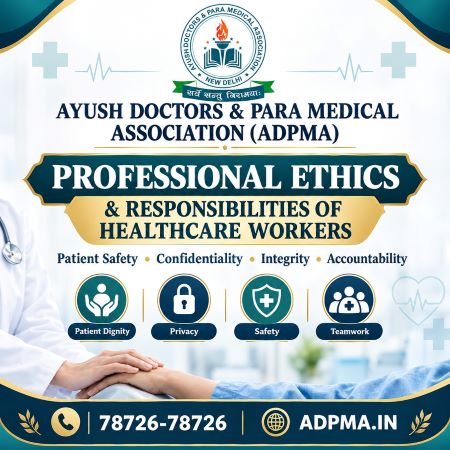
Professional Ethics and Responsibilities of Healthcare Workers
Published by: AYUSH Doctors & Para Medical Association (ADPMA)
Healthcare professionals play a vital role in protecting public health, supporting patients and delivering safe, responsible and ethical healthcare services. Doctors, nurses, paramedical professionals, technicians, therapists and other healthcare workers are expected to maintain professional standards while interacting with patients, families and colleagues.
Professional ethics are the moral principles and standards that guide healthcare workers in their daily responsibilities. These principles help build trust, protect patient rights, improve communication and promote accountability throughout the healthcare system.
In an environment where patient safety, privacy and quality of care are increasingly important, understanding professional ethics is essential for every healthcare professional.
1. What Are Professional Ethics in Healthcare?
Professional ethics in healthcare refers to the principles and standards that guide the conduct, decisions and responsibilities of healthcare professionals.
These principles help healthcare workers determine what is appropriate when treating patients, handling confidential information, communicating medical risks or responding to challenging situations.
Professional ethics generally include:
- Respect for patient dignity and individual rights.
- Honesty and integrity in professional practice.
- Confidentiality and protection of personal information.
- Informed consent and respect for patient autonomy.
- Commitment to patient safety and quality of care.
- Accountability for professional decisions and actions.
- Fairness, non-discrimination and respectful communication.
Ethical healthcare is not limited to clinical treatment. It also includes administrative responsibilities, record management, communication, teamwork and the responsible use of healthcare resources.
2. Core Principles of Healthcare Ethics
A. Respect for Patient Dignity and Autonomy
Every patient deserves to be treated with dignity, courtesy and respect, regardless of their financial status, gender, age, disability, cultural background or personal circumstances.
Healthcare workers should provide patients with understandable information about their care and respect their right to participate in decisions, subject to applicable laws and emergency provisions.
Patients should not be humiliated, threatened or discriminated against because of their health condition or personal circumstances.
B. Beneficence: Acting in the Patient's Best Interests
Beneficence means taking appropriate steps to promote the well-being of patients.
Healthcare professionals should aim to provide care that is appropriate to the patient's needs, professional competence and available evidence.
This includes explaining relevant care options, supporting preventive healthcare and referring patients when their needs fall outside the professional's competence.
C. Non-Maleficence: Avoiding Preventable Harm
Non-maleficence means avoiding unnecessary or preventable harm.
Healthcare workers should follow applicable safety protocols, maintain hygiene, use equipment appropriately and recognise situations that require additional clinical support.
They should not perform procedures beyond their authorised scope of practice or provide treatment without the required competence, supervision or legal authority.
D. Justice and Fair Treatment
Justice in healthcare means treating patients fairly and making appropriate healthcare decisions without unjustified discrimination.
Healthcare professionals should respect the dignity and rights of all patients and follow applicable policies when allocating services, managing waiting lists or responding to competing healthcare needs.
E. Honesty and Professional Integrity
Honesty is fundamental to public confidence in healthcare.
Healthcare workers should provide accurate information about their qualifications, experience, professional role and services. They must not fabricate medical records, misrepresent treatment outcomes, make unsupported health claims or conceal important errors.
Professional integrity also means acknowledging limitations and seeking help when necessary.
3. Maintaining Patient Confidentiality
Patient confidentiality is one of the most important responsibilities of healthcare professionals.
Medical records may contain sensitive information about a person's health, treatment, family history and personal circumstances. Such information must be handled carefully and accessed only for legitimate, authorised purposes.
Healthcare workers should:
- Avoid discussing patient information in public areas.
- Protect physical records, computer systems and digital communications.
- Share information only with authorised persons for legitimate purposes.
- Obtain appropriate consent before sharing information when required.
- Avoid posting identifiable patient details, photographs or treatment information on social media without proper authorisation.
- Follow applicable privacy laws, professional rules and institutional policies.
Confidentiality is not absolute. Disclosure may be permitted or required by law in certain circumstances, such as specified public-health reporting obligations or valid legal orders. Healthcare workers should follow the applicable legal requirements and institutional procedures.
4. Informed Consent and Patient Rights
Informed consent is an important part of ethical healthcare. Before a procedure or intervention requiring consent, patients should receive relevant information in a language and form they can understand.
Depending on the situation, this may include:
- The nature and purpose of the proposed procedure.
- Expected benefits and material risks.
- Available alternatives, where applicable.
- Relevant consequences of declining the proposed intervention.
- An opportunity to ask questions and make a voluntary decision.
Consent should not be obtained through coercion, deception or inappropriate pressure. Healthcare workers must follow applicable requirements concerning capacity, authorised representatives, emergency treatment and documentation.
A signed form alone does not necessarily establish that a patient has been adequately informed. Communication and understanding remain important.
5. Working Within the Scope of Professional Practice
Every healthcare professional must understand the limits of their education, training, qualifications and legal authorisation.
Doctors, nurses, laboratory technicians, physiotherapy professionals, imaging technicians, pharmacists and other healthcare workers have different roles and responsibilities.
Professional responsibilities include:
- Performing only those duties for which the individual is appropriately trained and authorised.
- Following applicable laws, professional regulations and institutional protocols.
- Seeking supervision or assistance when required.
- Referring patients to an appropriately qualified professional when the situation exceeds one's competence.
- Avoiding misleading representations about qualifications, registration, licences or professional status.
A course certificate or educational qualification does not automatically confer every form of professional registration, statutory licence or independent practice authority. Requirements depend on the profession, qualification, applicable law and relevant regulatory framework.
6. Communication and Respectful Behaviour
Effective communication helps patients understand their care and express their concerns.
Healthcare workers should listen attentively, explain information in accessible language and communicate respectfully with patients, family members and colleagues.
Good communication includes:
- Listening without unnecessary interruption.
- Explaining instructions clearly and checking understanding.
- Maintaining a calm and respectful manner.
- Avoiding insulting, discriminatory or threatening language.
- Communicating relevant concerns to the appropriate team members.
- Maintaining appropriate professional boundaries.
Healthcare professionals should also be sensitive to cultural differences, disability-related needs and language barriers.
7. Patient Safety and Infection Prevention
Patient safety is a shared responsibility across clinical and support services.
Healthcare workers should follow established infection-prevention practices, use appropriate personal protective equipment, handle sharps safely and maintain clean clinical environments.
Important responsibilities include:
- Performing hand hygiene at appropriate times.
- Following applicable sterilisation and disinfection procedures.
- Using medicines and medical equipment only as authorised and trained.
- Identifying and reporting potential hazards.
- Following patient identification and documentation protocols.
- Reporting incidents, near misses and safety concerns through appropriate channels.
Errors and adverse events should be addressed according to institutional policies and applicable reporting requirements. Prompt action, appropriate escalation and accurate documentation can help reduce further harm.
8. Accurate Documentation and Record Keeping
Healthcare records support continuity of care, communication, clinical decision-making and accountability.
Documentation should be accurate, timely, relevant and maintained according to applicable requirements.
Healthcare professionals should never falsify entries, fabricate observations, alter records improperly or record procedures that were not performed.
Corrections and amendments should follow approved procedures and preserve the integrity of the record. Access to records must also be controlled in accordance with applicable privacy and information-security requirements.
9. Professional Boundaries and Conflicts of Interest
Healthcare workers must maintain appropriate professional relationships with patients.
They should avoid exploiting a patient's vulnerability, trust or dependence for personal, financial or other improper benefit.
Potential conflicts of interest may arise from financial incentives, commercial relationships, gifts, referrals or personal connections.
Professionals should disclose and manage relevant conflicts according to applicable professional standards and institutional policies.
Recommendations concerning medicines, devices, tests or services should be based on appropriate clinical considerations rather than undisclosed personal gain.
10. Continuing Professional Development
Healthcare knowledge, technologies and professional standards continue to evolve. Continuing professional development helps healthcare workers maintain and improve their competence.
Professional learning may include:
- Attending relevant seminars, workshops and conferences.
- Participating in appropriate continuing education programmes.
- Updating knowledge of patient safety and infection prevention.
- Learning about changes in relevant laws and professional regulations.
- Reviewing evidence-based guidance relevant to one's role.
- Developing communication, teamwork and digital-health skills.
Healthcare workers should pursue learning opportunities appropriate to their profession and comply with any mandatory continuing education requirements applicable to them.
11. Teamwork and Professional Accountability
Safe healthcare often requires collaboration among multiple professionals.
Healthcare workers should respect the contributions of colleagues, communicate relevant information and follow established reporting and escalation procedures.
Professional accountability includes accepting responsibility for one's actions, cooperating with legitimate investigations, reporting serious safety concerns and learning from mistakes.
Where misconduct, negligence or unsafe practices are suspected, concerns should be raised through appropriate institutional or regulatory channels, with due regard for confidentiality, evidence and applicable procedures.
12. Ethical Challenges in Modern Healthcare
Healthcare professionals may encounter difficult situations involving patient autonomy, limited resources, privacy, family expectations or disagreement about treatment.
Examples include:
- A patient declining a recommended intervention.
- A family member requesting confidential patient information.
- A colleague making an error that may affect patient safety.
- A patient asking for treatment outside the professional's authorised scope.
- A commercial representative offering an inappropriate personal benefit.
- A request to publish a patient's photograph or clinical story online.
In such situations, healthcare workers should consider patient safety, professional duties, relevant evidence, applicable law and institutional policies. When uncertainty remains, they should seek advice from an appropriate senior professional, ethics committee or authorised institutional officer.
13. Why Professional Ethics Matter in Healthcare
Professional ethics contribute to a safer and more trustworthy healthcare environment.
Their benefits include:
- Greater patient trust: Respectful and honest conduct strengthens confidence in healthcare services.
- Improved patient safety: Following professional standards helps reduce avoidable risks.
- Better communication: Clear explanations support informed decision-making.
- Accountability: Appropriate documentation and reporting improve transparency.
- Professional credibility: Ethical conduct strengthens confidence in healthcare professionals and institutions.
- Responsible healthcare delivery: Clear professional boundaries help protect patients and healthcare workers alike.
Ethics should therefore be an integral part of healthcare education, practical training and professional development.
Frequently Asked Questions (FAQs)
1. What are professional ethics in healthcare?
Professional ethics are the principles that guide healthcare workers in matters such as patient dignity, confidentiality, informed consent, honesty, safety and accountability.
2. Why is patient confidentiality important?
Confidentiality protects personal health information, supports patient trust and helps maintain the integrity of the healthcare relationship. Information must be handled according to applicable law and professional requirements.
3. Can a healthcare worker perform duties outside their qualification?
Healthcare workers should not undertake duties beyond their competence or legal authorisation. Permitted duties depend on the profession, qualifications, applicable regulations and any required supervision.
4. What should a healthcare worker do after identifying a patient-safety concern?
The worker should take appropriate immediate steps within their role, inform the responsible person and follow established incident-reporting and escalation procedures.
5. How can healthcare professionals improve their ethical practice?
They can strengthen their practice through continuing education, regular review of applicable professional standards, respectful communication, accurate documentation and appropriate consultation when facing ethical uncertainty.
6. Are professional ethics and legal requirements the same?
No. Ethics provide principles for responsible conduct, while laws and regulations establish enforceable requirements. A particular action may raise ethical concerns even when its legal status requires further assessment. Healthcare workers should comply with applicable laws as well as relevant professional codes and institutional policies.
Conclusion
Professional ethics and responsibilities are essential to safe, respectful and accountable healthcare. Every healthcare worker has a role in protecting patient dignity, maintaining confidentiality, communicating honestly, preventing avoidable harm and working within the limits of their competence and legal authority.
Ethical healthcare is not achieved through technical knowledge alone. It also requires integrity, empathy, continuous learning and a commitment to responsible professional conduct.
By promoting professional ethics through education, awareness and institutional support, healthcare organisations and professional associations can contribute to a culture that places patient safety and public trust at the centre of healthcare delivery.
About AYUSH Doctors & Para Medical Association (ADPMA)
AYUSH Doctors & Para Medical Association (ADPMA) supports healthcare awareness, professional education and the responsible exchange of knowledge related to healthcare and allied fields.
Contact Details
AYUSH Doctors & Para Medical Association (ADPMA)
Aman Nagar, Behind Green Land School, Near Jalandhar Bye Pass, Ludhiana – 141008, Punjab, India
Email: adpma2001@gmail.com
Website: https://www.adpma.in